- TFS Podcast
- Support This Site

Valuable answers for valid questions about world religions, cults, worldviews and the Christian church
This site contains over 130 pages of free content in articles, videos and audio – it might be faster to use our search function to find what you are looking for
This page might appear to be a bit “heavy” on Roman Catholics but it is simply sharing the truth of history and doctrine. I’m not an “anti-Catholic” rather to the contrary, as a former Catholic of 24 years I still have many friends and family who consider themselves to be a part of that Church and so this page is written to shed some light on what the Bible has to say vs. what the Roman Catholic Church has to say about life and the hereafter.
There are a number of Catholic beliefs that are decidedly contrary to Scripture. A recent discussion on social media with current Catholic “apologists” revealed that they believe the church at Rome “gave” the world the Bible. It did not. Despite this boasting, they ridicule Bible-believing Christians for adhering to God’s word instead of yielding to word of the Pope or the Catholic magisterium.
The answer to this question “What is the Catholic church?” requires a multi-faceted answer. The Roman Catholic Church is more of a world religion unto itself than it is a Christian denomination or cult although most Bible-believing Christians would consider it an “apostate church” that is to say that it is a church that departed from the faith and has embraced an altogether different gospel than that of the Apostles.
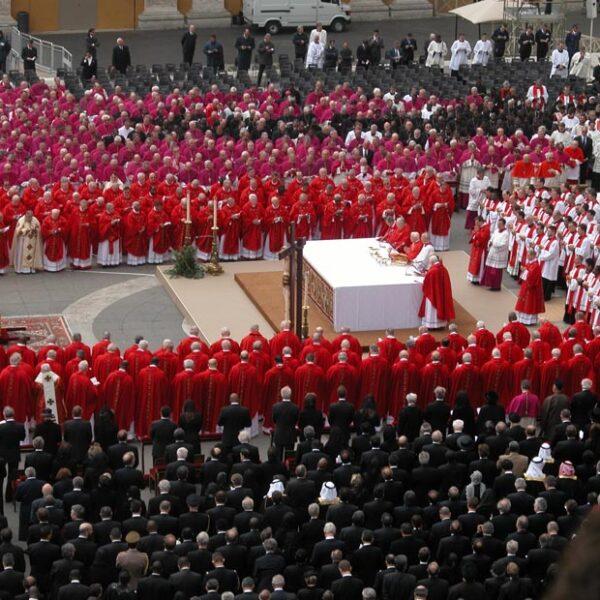
It first took on this apostate church status by way of a schism from the Biblical historical Christian faith shortly after the Great Schism of 1054. It was headquarted in ancient Rome and still maintains Vatican city as an independent sovereign nation unto itself. There were early contributors to this organization in Leo I (a.k.a. Leo the Great) who argued for the preeminency of the Roman See and was the first to receive the title of “Pope”, Augustine, the founder of a strict authoritarian and centralized church government (which Catholics would use to murder/martyr opponents of their religion) and Gregory I (a.k.a. Gregory the Great) who blurred the lines between church and state authority by taking part in the coronation of kings.
When we ask, What is the Catholic church, we need to start with the defintion of the word “Catholic”. It simply means “worldwide” and indeed the first organized group of Christian churches were worldwide and utilised the term “One Catholic and Apostolic Church” in the Nicene Creed. This uses “Catholic” as an adjective describing a universal or worldwide church. However, this in no way referred to a delineation of one metropolitan church group over any other.
During the early years of Christianity, there weren’t denominations and therefore no need to refer to a church by a particular tag: Lutheran, Catholic, etc. The earliest Christian Church was unified – not under a Pope and dogma but rather under the teaching of the Apostles which were recorded and preserved in Scripture. Church governance was decentralized with each congregation being generally denoted by its geographic location. i.e. the church at Ephesus, the church at Antioch, etc. and each region was led by a Bishop who was also called an “overseer” an “elder” or a “Pastor”.
Unfortunately, over the course of nearly 800 years, a small crack would slowly divide this single unified church into two branches: The Roman Catholic branch and the Eastern Orthodox branch of the visible Christian church. Both branches would claim to be the “true church” and would accuse the other of apostasy even up to the twentieth century. Thus, the word “catholic” as an adjective was taken on by the Church at Rome as a proper name and it became widely used as a “noun”.
Today Catholics try to point back to the Nicene creed and its use of the word “catholic” as evidence of their own antiquity when in reality, the Roman Catholic Church has only existed as a distinct sect of Christianity (visibly) for about a thousand years. There are also currently active ecumenical efforts to arrive at a peaceful, harmonious co-relationship between the Roman Catholics and the Eastern Orthodox and even a few mainline Protestant denominations. But ultimately the call is very one-sided, it isn’t “let’s find a middle ground” it is far more along the lines of “come home to Rome” i.e. come back under the authority of the Pope.
Writings of Ignatius and Ireneaus (Against Heresies) would begin to extol the Apostle Peter as the first Bishop of Rome and the preeminence of the Roman See over all other regions. The term “Pope” which was derived from the Greek word “Papa” or “Pappas” was not used until the late 2nd and early 3rd centuries to denote the premier Bishop or “Father” over many Bishops.
The idea of an emerging, strong, and centrally governed church was taken even further by Augustine, a Bishop of Hippo. Augustine believed a strong Church government was necessary for survival and ultimately defeating heresy. Unfortunately, this introduced abuse by the hierarchy of the governing church against those that would question the unbiblical doctrines introduced by various church leaders. i.e. immaculate conception of Mary and assumption of Mary, prayer to the saints as intermediaries who could somehow hear the prayers of millions, etc. Peter Waldo, John Hus, William Tyndale and others would be labeled “heretics” and would be martyred for their bold stand for the truth of scripture.
To further assert authority over the masses, the doctrine of Papal Infallibility would then be added to this list of errors.
The Catholic church authority rests in what it calls “Papal authority“. The idea of Papal authority resulting in an all-powerful “pope” was originally introduced by Leo I who was the head of the Church at Rome in the early 5th century. He argued to establish Rome, his See, as the “primary see” and its Bishop (himself) as naturally being considered the “primal” Papacy.
He would emerge from this contested ecumenical council as “Pope Leo”, the first to be referred to by that title with the meaning of “Primal Papal Office”. This office would be further solidified in the west by the combination of church and state with the Pope appointing Kings and emperors and Kings and emperors influencing who would be “Pope”.
The office of “Pope” would begin to be authoritatively enforced under Pope Gregory the Great (c.AD 600) and over the course of time Papal infallibility was introduced primarily (and surprisingly) by theologians like Theodore Abu-Qurrah, Thomas Aquinas, and John Peter Olivi, and not by the Popes themselves, as many assert today. During the Vatican I council in 1870, the dogma of the infallibility of the pope was officially codified and is still preached and practiced today.
The bizarre error is never more apparent than when recent Popes speak infallibly via ex-cathedra and their decrees contradict previous Popes who also spoke “ex-cathedra” and “infallible”. This became the joke of all Europe when in 1409 until 1418 there were three (3) sitting Popes at the exact same time Urban VI, Clement VII and Alexander V all claiming to have supreme authority over the church and all in complete contradiction to each other.
Originally each church region was led by a Bishop which means overseer or “elder” or “presbyter”. It was not part of a hierarchy of Bishops leading to an Arch-Bishop and certainly not leading to a “Pope” of any kind, however, by the fourth ecumenical council there were churches all over the world that had (and still have) no affiliation whatsoever to the Roman Catholic Church. Churches like the Coptic Christians, Syriac Orthodox, Armenian Apostolic, St Thomas Christian Church of India, and Church of the East. All of these were either formed during the time of the Apostles in the first century AD or were formed via disagreement over the 4th ecumenical Council resolution on Christology in 451 at Chalcedon.
It was much later that the Roman Catholic Church began to claim an “unbroken line” of Popes dating back to Peter, even though the first “Pope” was self-designated by Leo I in the 5th century. The proof text of scripture used (centuries later) to justify the power grab by Rome would be found in the book of Matthew:
“But what about you?” Jesus asked. “Who do you say I am?” Simon Peter answered, “You are the Messiah, the Son of the living God.” Jesus replied, “Blessed are you, Simon son of Jonah, for this was not revealed to you by flesh and blood, but by my Father in heaven. And I tell you that you are Peter, and on this rock I will build my church, and the gates of Hades will not overcome it. I will give you the keys of the kingdom of heaven; whatever you bind on earth will be bound in heaven, and whatever you loose on earth will be loosed in heaven.”
Matthew 16:15 Tweet
What is the Catholic church can be answered with the statement of its foundations and it isn’t Jesus, the Bible nor the Apostle Peter. Peter made it clear in his writings that he was not the “rock” that Jesus was speaking of but that the “Messiah, Son of the Living God” whom Peter identified is the Rock upon which the church is built which is consistent with the rest of Scripture. Furthermore Peter refers to believers as “living stones” being built up into a “Spiritual House”. Despite this, the Roman Catholic Popes have through history clung to the notion that not only is Peter the first Pope as the “Rock” but they are also his successors and that they (the popes) have the keys of the kingdom of heaven – which is what resulted in them selling indulgences whereby a donation would cause them to utter a prayer that releases a soul from burning purgatory. This ridiculous heresy is what would ignite the Reformation nearly 1100 years after Leo I would declare himself “Pope” of the Church.
The idea of an emerging, strong, and centrally governed church was taken even further by Augustine, a Bishop of Hippo. Augustine believed a strong Church government was necessary for survival and ultimately defeating heresy. Unfortunately, this introduced abuse by the hierarchy of the governing church against those that would question the unbiblical doctrines introduced by various church leaders. i.e. immaculate conception and assumption of Mary, prayer to the saints as intermediaries, etc.
John Hus, and others who attempted to accurately answer what is the Catholic church. would be labeled “heretics” and would be martyred for their boldness and desire to live and preach the Scriptures instead of tradition and Thomas Aquinas. To further assert authority over the masses the doctrine of Papal Infallibility would be added to this list of errors.
Papal infallibility was introduced primarily (and surprisingly) by theologians like Theodore Abu-Qurrah, Thomas Aquinas, and John Peter Olivi, and not by the Popes themselves, as many assert today. During the Vatican I council in 1870, the dogma of the infallibility of the pope was officially codified and is still preached and practiced today.
This office would be further solidified in the west by the combination of church and state with the Pope appointing Kings and emperors and Kings and emperors influencing who would be “Pope”. The office of “Pope” would begin to be authoritatively enforced under Pope Gregory the Great (c.AD 600) and the iron-fisted reign of the popes would start to wane with the introduction of the Waldensians (earliest reformers) and the office would become a laughing stock in the Christian world with the “Great Papal Schism” of the 14th century where the Roman Catholic church had THREE Popes at once – none of which wanting to give up their authority!
I’ve created a timeline of the key events which were the “cracks” that developed into a full blown schism between the Western Church and the Eastern church by 1054 AD. This event in Church History is known as the “Great Schism” and two schismatic systems of faith would emerge: The Roman Catholic Church and the Eastern Orthodox Church which should help to answer the question, What is the Catholic church?
Select the arrows at the left and right of the timeline below, select the full screen icon in the upper right corner of the graphic to view the timeline in a larger format.
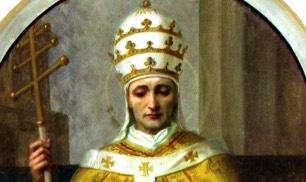
Pope Leo IX of the Western Roman Church – fought against the Normans in 1052 and was taken captive
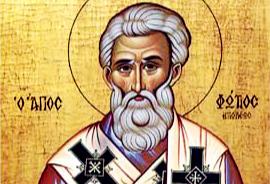
Michael Cerularius – Archbishop of Constantinople and Patriarch of the Eastern Church occupied the highest level of religious authority in the East
Prior to this, Leo suppressed Greek liturgy in his domain which didn’t sit well with the Eastern Church.
Michael suppressed western Latin liturgy in his domain and encouraged his parishes to only conduct services in the Eastern/Greek liturgy.
Leo sent legate Cardinal Humbert (not the nicest and humblest of fellows) to Michael Cerlarius to give him supposed “evidence” from Constantine’s “donatio” which supposedly carried Constantine’s appointment of Rome as the primary See and its Bishop with primal papacy. This document was proven (even by the Roman Church) to be a outright forgery.
Rome could not use the Donatio to claim they were the “primary anything” as a head of state was not given the authority on earth bind/loose foundational doctrine for the church. This authority was given only to the Apostles as they planted churches and were used by the Holy Spirit to compose Scripture.
The Donatio was rightfully refused by Cerularius and Pope Leo IX officially blew his pointy top thus marking the start of the descent of papal influence which had reached its peak during his tenure.
Cerularius did the unspeakable for his time: He refused the Roman Pope’s envoy which carried the “Donatio” demanding the Archbishop of Constantinople’s recognition of the supremacy of Rome. This was an affront to the self-important Roman Bishop’s self-appointed primacy.
Pope Leo IX sent Cardinal Humbert back to Cerularius to deliver a Papal Bull of Excommunication. Thereby excommunicating the highest authority of the Eastern Church and those that followed him from the Western Roman Church. Humbert laid this Papal Bull of Excommunication directly on the altar of Hagia Sophia (like the Vatican of the Eastern Church – see photo at top of page) as a blatant disregard for the Eastern Church’s leader, Cathedral, and followers. With one obnoxious act that followed nearly 800 years of obnoxious acts by the Roman Church – they effectively cut their numbers in half and a new denomination was born.
In an act of “tit for tat”, Cerularius excommunicated Humbert and his envoy from the Eastern Church along with the dead Pope Leo IX. Both sides ultimately excommunicated each other giving full evidence to the world that the Biblical church that Jesus established was not evident in either the Western Roman Church nor the Eastern Greek Church. The real church would continue on, far removed from this carnal conflict of pride.
Crime Against The Eastern Church – Roughly 20 years after the Massacre of the Latins by the East, the Roman Pope was still commissioning “Crusades” by his church which is now referred to as the “Roman Catholic Church”. These were decidedly unbiblical and to this day, true Christians are blamed for this heretical practice from an apostate church.
Crime Against The Western Church – Although there were efforts at reconciliation between east and west and continual attempts at diplomacy, a few incidents would cauterise the wounds on both sides and make a rejoining of East-West impossible.
The 4th Crusade which took place 1202-1204 AD was especially evil and bloody:
Pope Innocent III of the Roman Catholic Church called for this crusade out of his desire to supposedly free Jerusalem from the Muslim Saladin’s rule. This decree completely ignored Jesus’ stern warning to the Apostle Peter that “He who lives by the sword will die by the sword” and again “Love your enemy, bless them, and do not curse them”. This Pope resorted to carnal methods to carry out a worldly conquest of a city that God Himself will liberate and establish at the conclusion of the 7 year tribulation He describes in Revelation.
Innocent III’s Crusade began as a “commercial” venture to repay a massive Debt to the Venetians of Rome by way of killing Muslims and allowing the Venetian ships to capture booty for themselves. It didn’t turn out quite as it was designed.
If something were to go wrong (and it did) and no conflict or invasion of Jerusalem were to take place (and it didn’t) Innocent III forbade his Crusading Venetian mercenaries from carrying out violence against their Christian “brothers”. They found no opportunity to invade and loot the Muslims of Jerusalem, they instead chose to ignore Pope Innocent’s commands and, having the massacre of the Latins, still fresh in memory, they instead chose to sack, loot, pillage, and rape Constantinople.
These Venetian members of the apostate Roman Catholic Church behaved like savage beasts, raping Christian women, robbing and murdering Christian men, and ultimately desecrated the Hagia Sophia – something even the Muslims would not do. This was written about by Eastern Orthodox clergy who were eyewitnesses to this horror.
The East struck the first blow with an incident which lives in historic infamy: The Massacre of the Latins took place in 1182 when the Constantinople populace who now identified themselves as the Eastern Orthodox Church (The “true” Church) killed or sold the Latin population of the city into slavery to the Turks. Ironically, it is these same Turks that would be the downfall of the Eastern Church nearly 300 years earlier.
The widow of Eastern Emperor Manuel I was Latin (Roman). A nationality/culture that was by now, hated by the Eastern citizenry. She ruled as regent this was a thorn in the side of the people
Andronikos Komnenos used violence and described his actions as “liberating” Constantinople from the Latins, He held a celebration and the people carried out murders of young, old, and Latin clergy.
Over the course 0f 700+ years, two key ‘sects’ of the “visible church” would emerge. They would not yet be considered denominations until well into the denomination age of the church in the 17th-19th centuries AD.
What is the Catholic church and how does it compare to what the Bible says. Is Roman Catholicism a part of Biblical Christianity or has it become its own world religion? There are scores of Roman Catholic “dogmas” or doctrine that has been developed over 1500 years that are apart from and often times contradictory to the Bible here are a few of those doctrines (many of which are embraced also by the Eastern Orthodox churches as well):
CATHOLICS: Believe and practice the ‘tradition’ of separating Christianity into two castes or classes: Clergy and Laity specifically by way of elaborate clerical vestments among other things (in violation of Matt. 23:5-9). This practiced passed on to the Eastern Orthodox after the Great Schism and even to many Protestant denominations after the Reformation.
"But all their works they do to be seen by men. They make their phylacteries broad and enlarge the borders of their garments. They love the best places at feasts, the best seats in the synagogues, greetings in the marketplaces, and to be called by men, ‘Rabbi, Rabbi.’ But you, do not be called ‘Rabbi’; for One is your Teacher, the Christ, and you are all brethren. Do not call anyone on earth your father; for One is your Father, He who is in heaven."
Matthew 23:5-9 (NKJV)
CATHOLICS practice the adoration, prayer, and veneration of Mary by way of an ancient theological tradition called Theotokos which means “Mother of God” (the Biblical God has no mother). Catholics even refer to her as the “Queen of heaven and earth” – this title “Queen of Heaven” is not new to the Roman Catholic schism nor is it unique to Roman Catholicism as it has been a famous designation of a false goddess of near eastern mystical religions and paganism. Contrary to Luke 11:27-28
BIBLE: Luke 11:27-28 “And it came to pass, in his saying these things, a certain woman having lifted up the voice out of the multitude, said to him, `Blessed the womb that carried thee, and the paps that thou didst suck!’ And he said, `Yea, rather, blessed are those hearing the word of God, and keeping [it]!'” (YLT)
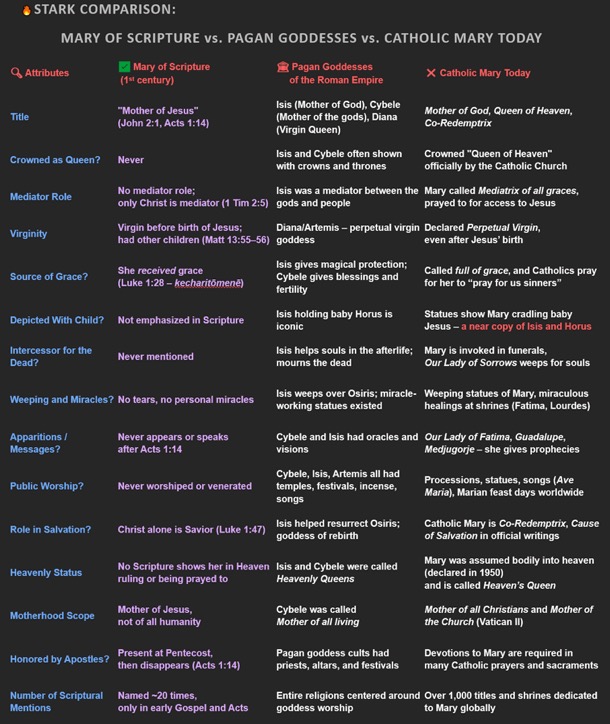
Have a look at the chart below which compares Mary of the Bible with the Mary of the Roman Catholics – using scripture.
Catholics believe and practice that only those Roman Catholics specifically trained in a Roman Catholic seminary in the teachings of Thomas Aquinas (not the Bible) and by other Roman Catholic seminary professors can be “priests” before God. This is contrary to the Bible – 1 Pet 5:9
BIBLE: All genuine believers are a holy priesthood: ” But ye are a chosen generation, a royal priesthood, a holy nation, a peculiar people, that ye should show forth the praises of Him who hath called you out of darkness into His marvelous light. In times past ye were not a people, but are now the people of God; who had not obtained mercy, but now have obtained mercy.” 1 Pet. 2:9-10 (KJ21)
Strict compulsory observance of Catholic-created religious days/periods like Ash Wednesday, Lent, etc – many of which were “Christianized” pagan holidays meant to make Christianity more palatable to new pagan converts.
BIBLE: Compulsory observance of one day over another is a fleshly/worldy (sinful) ordinance:
“But now after you have known God, or rather are known by God, how is it that you turn again to the weak and beggarly elements, to which you desire again to be in bondage? You observe days and months and seasons and years. I am afraid for you, lest I have labored for you in vain."
Galatians 4:9-11
Only special Roman Catholics who have had 3 confirmed miracles by a Roman Catholic Pope can be considered a “saint” and thereby canonised (apparently the miracles considered exclude card tricks)
BIBLE: All true believers in Christ for the forgiveness of their sin are “saints”.
“To the church of God which is at Corinth, to those who are sanctified in Christ Jesus, called to be saints, with all who in every place call on the name of Jesus Christ our Lord, both theirs and ours"
1 Corinthians 1:2
The creation of, veneration and bowing to images, pictures, statues, and icons is actively encouraged as a form of Roman Catholic worship
All dead saints and Mary are to be prayed to as “mediators” in the spirit realm to God
This is contrary to Ex. 20:4-5 where the Lord forbids such pagan practices among all who are called by His name – Christians.
“They sacrificed to demons who were not God, To gods whom they have not known, New gods who came lately, Whom your fathers did not dread."
Deuteronomy 32:17
Praying to the dead is a form of pagan necromancy and Scripture is clear that there is to be only one mediator between God and man:
"For there is one God, and one mediator also between God and men, the man Christ Jesus,"
1 Timothy 2:5
Infant baptism by sprinkling is considered a legitimate initiation into the Church (baptismal regeneration), the Body of Christ
(In Scripture, baptism is clearly communicated as an act of volition by an adult of consenting age and the Baptism doesn’t save a person, but is a public declaration that the baptised person has repented of their sinful rebellion toward God and have received forgiveness for their sins via Jesus death on the cross – Col. 2:12).
Priests must be called “father” and the Pope “Holy Father” despite the fact that many of these Popes were anything but “holy” fathering illegitimate children across Europe over the centuries and paying money to get offices and/or accepting money to give offices. They do this in private while they pray publicly while wearing scarlet, purple, jewels and gold which Jesus and the Apostles did not wear.
BIBLE: Call no man ‘father’ and do not wear fancy religious garb nor do your deeds to be seen by men.
"But all their works they do to be seen by men. They make their phylacteries broad and enlarge the borders of their garments. They love the best places at feasts, the best seats in the synagogues, greetings in the marketplaces, and to be called by men, ‘Rabbi, Rabbi.’ But you, do not be called ‘Rabbi’; for One is your Teacher, the Christ, and you are all brethren. Do not call anyone on earth your father; for One is your Father, He who is in heaven."
Matthew 23:5-9
To provide validity to the invented office of “Pope” Catholics try to claim that Peter is the foundation of the Church and the First Pope of Rome and Christ-mandated servant leadership has never been the approach with the Roman Catholic hierarchy who expect to BE served and not to serve.
1 Cor. 3:11 says that NO one can lay any other foundation for the church besides the only foundation Christ Jesus – not Peter! And in Luke 22:24-27 Jesus says the leaders of the church are to be servants or “least” to be considered first –
Priests Bishops and Clergy are forbidden to marry
Contrary to 1 Tim. 3:2, 4-5 where Bishops are explicitly instructed to be married in order to be an overseer. Also, we are warned in Scripture that heretical doctrines would creep into the church which forbid Christians to marry ITim 4:3
During the Eucharist, the Roman Catholic Priest behaves as a “stand-in” for Christ (vicar) and calls down the Holy Spirit (in Greek: epiklesis) upon the gifts (the bread and the wine). They are then supposedly changed into the actual body and blood of Christ. This process is the unbiblical doctrine known as “transubstantiation” whereby the bread and wine is supposedly “literally” changed into the actual flesh and blood of Jesus.
The doctrine of transubstantiation is blasphemous in the eyes of Biblical Christianity as it proposes that the priest (an unbiblical position) magically transforms the store-bought wafer and wine in the ACTUAL physical body and blood of Jesus Christ. This crucifies Christ all over again and again and again despite His final words on the cross telling us that “It is finished!:
"So when Jesus had received the sour wine, He said, “It is finished!” And bowing His head, He gave up His spirit. "
John 19:30
The Bible holds that forgiveness of sin is by the grace of God alone through faith in Christ alone. No magic wafer nor a mediator called a ‘priest’ is ever mentioned as part of the process:
"For by grace you have been saved through faith, and that not of yourselves; it is the gift of God, 9 not of works, lest anyone should boast."
Ephesians 2:8-9
This is a bizarre doctrine in so many ways and has been used to manipulate the masses of people to cowtow to the whims of the Pope whom the church teaches that he alone (not Christ) can save them from this imaginary purgatory.
Jesus declared on the cross “It is finished!” to signify that the work of redeeming the sins of mankind, for those who put their trust in Him, was finished upon his death and no further redeeming process e.g. purgatory is necessary. The Apostle Paul makes it clear that for believers we are “absent from the body and immediately present with the Lord”.
– in Luke 16:26 Jesus tells of a great fixed chasm whereby there is no crossing over from the sinful separated and the forgiven redeemed sides.
After this, Jesus, knowing that all things had already been accomplished, to fulfill the Scripture, said, “I am thirsty.” A jar full of sour wine was standing there; so they put a sponge full of the sour wine upon a branch of hyssop and brought it up to His mouth. Therefore when Jesus had received the sour wine, He said, “It is finished!” And He bowed His head and gave up His spirit."
John 19:28-30
"Therefore, being always of good courage, and knowing that while we are at home in the body we are absent from the Lord— for we walk by faith, not by sight— we are of good courage, I say, and prefer rather to be absent from the body and to be at home with the Lord. "
2 Corinthians 5:6-8
The practice of indulgences whereby a person can donate money to the Catholic Church and the Pope will then pray to have that person’s relative released from purgatory. This is a profane practice which drove Martin Luther to nail his 95 thesis to the door at Wittenberg and ignite the Reformation.
There is no purgatory in Scripture and there is not “buying” souls into or out of an eternal state. Hebrews 9:27 As it appointed once for man to die after this is the judgement
Repetitive multiplication of words over beads via the Rosary. It is also a pagan practice of Eastern false religions like Hinduism and Buddhism to pray over beads one at a time with a series of mantras – which perfectly describes the Roman Catholic practice of repetitive prayers and the Rosary)
This is a pagan practice strictly forbidden by Jesus in Scripture when He says “When you pray do not pray as the pagans do, they believe that with a multiplication of words they will gain a hearing…” Math 6:7.
There are seven Sacraments for the Roman Catholic church which are necessary for the salvation of the church member:
This is a false belief dating back to the 4th and 5th centuries and having been rightly rejected (for the most part) by the Reformers of the 16th century. Most Protestant churches accept baptism and communion as traditions of obedience but in keeping with the Scriptures they are symbolic: credo (conscious choice) baptism by submersion is Biblical in the sense that it represents outwardly that there has been a change inwardly with the old man going into the watery tomb and the new man in Christ arising from the water.
There is no Biblical support for pedo (clueless infant) baptism nor baptism by sprinkling of water that has somehow been made “holy” by the prayer of a sinful man going by an unbiblical title of “priest”. Nowhere in Scripture does it stipulate that the Holy Spirit “requires” these “sacraments” to either work in the church nor for the church to exist.
"Now as they went down the road, they came to some water. And the eunuch said, “See, here is water. What hinders me from being baptized?” Then Philip said, “If you believe with all your heart, you may.” And he answered and said, “I believe that Jesus Christ is the Son of God.” So he commanded the chariot to stand still. And both Philip and the eunuch went down into the water, and he baptized him. Now when they came up out of the water, the Spirit of the Lord caught Philip away, so that the eunuch saw him no more; and he went on his way rejoicing."
Acts 8:36-39
Like baptism, communion is an act of obedience whereby the believer comes together as the disciples in the upper room and we share in a bit of bread (unleavened if to match the unleavened bread broken at Passover like Jesus did) to represent the body of Christ and either a bit of wine or grape juice to represent the blood of Christ. We eat this together in “remembrance” of Jesus and His sacrificial work on the cross for our sins.
"Then He took the cup, and gave thanks, and said, “Take this and divide it among yourselves; 18 for I say to you, [c]I will not drink of the fruit of the vine until the kingdom of God comes.” And He took bread, gave thanks and broke it, and gave it to them, saying, “This is My body which is given for you; do this in remembrance of Me.” Likewise He also took the cup after supper, saying, “This cup is the new covenant in My blood, which is shed for you. "
Luke 22:17-20
The ‘gospel’ according to the Roman Catholic church is based on precepts and traditions of men – Popes, Cardinals, Catholic decrees:
‘This people honors Me with their lips, But their heart is far away from Me. ‘But in vain do they worship Me, Teaching as doctrines the precepts of men.’ Neglecting the commandment of God, you hold to the tradition of men.” He was also saying to them, “You are experts at setting aside the commandment of God in order to keep your tradition."
Mark 7:7-9
The Catholic gospel is a different gospel than that preached by the Apostle Paul and it is for this reason that Roman Catholics are not considered to be “another denomination” but rather it is an apostate church system. This is why we’ve listed it as a ‘schism” or “cult” of the Pope and not part of the Biblical Historical Christian faith. Here is the one and only true Gospel according to the Bible:
As we have said before, so now I say again: If anyone is preaching to you a gospel contrary to the one you received, let him be accursed.
Galatians 1:9
As a Roman Catholic, I would go to confession each week and confess as many of my sins as I could remember to a Catholic priest. He would then prescribe a set number of acts of penance and/or acts of contrition and then a set number of “Hail Mary” prayers which should be chanted over a set of Rosary beads. There was no mention of Jesus as the only mediator between God and man (1Tim 2:5). We were taught that Mary, like the Son of God Himself, was born sinless and like the Son of God ascended into heaven and like the Son of God received the prayers of billions as a mediator between God and man.
Here is a chart that someone else put together that I really could not improve upon so I am posting it as it is. It is an excellent comparison between the true Mary of Scripture – who is blessed among all women, the Roman Catholic Mary who has been perverted into the position of the “Queen of Heaven” and the pagan goddesses who are also called “Queen of Heaven”.
If ever there was a final event which marked the clear apostasy of the Roman Catholic Church, it was the Council of Trent. This Catholic-only council, also called the “19th Ecumenical Council”, took place from 1544 to 1563 as a “Counter Reformation” to reaffirm those Catholic doctrines which cannot be found in Scripture and which were being eliminated from Christian practice by way of the Reformation.
Trent took place with 168 Catholic Bishops (two-thirds of which were Italian) convening to condemn Protestantism and to specify the Roman Catholic versions of salvation, sacraments/sacerdotalism, their version of the biblical canon which included 7 apocryphal Jewish books (which even the Jews reject as inspired), and the unbiblical mass.
Lutherans were invited to attend this supposed “ecumenical” council but left after it became apparent that it was just another series of anathema (condemnation/curse) declarations against the Reformation. The Council of Trent was the final nail in the coffin whereby Bible-believing Christians realized that the Catholic church could not be reformed but was in reality an apostate church.
The Council of Trent carried about 33 Canons against Biblical justification and also a Calvinistic/Reformed version of justification. I’ve highlighted a few here:
If any one saith, that by faith alone the impious is justified; in such wise as to mean, that nothing else is required to co-operate in order to the obtaining the grace of Justification, and that it is not in any way necessary, that he be prepared and disposed by the movement of his own will; let him be anathema.
CANON 9, Council of Trent
The first part of this Catholic curse was against the scriptures in Ephesians 2:8,9 which clearly states “It is by grace you have been saved through faith and that not of yourselves it is the gift of god, not by works lest anyone should boast.”
The latter part of Canon 9 was against the “Irresistible Grace” doctrine which was originally invented by Augustine. It is evident that the Catholic hierarchy was unfamiliar with this historical fact as they have officially condemned someone whom they hold to be a “Saint”. It is mentioned in this Counter Reformation council because this invented doctrine was picked up by John Calvin of the Swiss Reformation and Martin Luther of the German Reformation.
"If any one saith, that, after the grace of Justification has been received, to every penitent sinner the guilt is remitted, and the debt of eternal punishment is blotted out in such wise, that there remains not any debt of temporal punishment to be discharged either in this world, or in the next in Purgatory, before the entrance to the kingdom of heaven can be opened (to him); let him be anathema."
CANON 30, Council of Trent
This curse is against all Bible-believing Christians who dare to question the unbiblical doctrine of “purgatory” teaching of the Roman Catholic Church. Despite this, there are many Catholics today which question or do not believe in purgatory which would cause them to fall under the curse attached to this made up doctrine.
"If any one saith, that the good works of one that is justified are in such manner the gifts of God, as that they are not also the good merits of him that is justified; or, that the said justified, by the good works which he performs through the grace of God and the merit of Jesus Christ, whose living member he is, does not truly merit increase of grace, eternal life, and the attainment of that eternal life, ...and also an increase of glory; let him be anathema."
CANON 32, Council of Trent
This cursing against the biblical doctrine of salvation by grace through faith is again, against Ephesians 2:8-9 and Titus 3:5 which says, “He saved us, not on the basis of deeds which we did in righteousness, but in accordance with His mercy, by the washing of regeneration and renewing by the Holy Spirit.
Canon 32 is also a misunderstanding of the passage in James whereby he gives us a definition of a “living” faith by saying that genuine fath in Christ will produce good works. This Canon reveals that the Catholic hierarchy knew (and knows) very little of Scripture or how to apply hermeneutics to interpret it correctly.
This travesty of Trent which condemned all calls to return to the recorded testimony and Gospel of the Apostles as found in the Scriptures is still affirmed by Popes and Roman Catholic followers today. They fully accept its apostate declarations of curses against the doctrines of the historical biblical Church as coming from a completely legitimate council. The Roman Catholic pagan practices of praying to dead saints and trusting in the “Queen of heaven” Mary with goddess-like powers and one’s own obedience to the dead rituals of the Roman Catholic church are still upheld and practiced today. The Council of Trent was the last so-called “Ecumenical Council” that would be held until the Vatican I Council of 1868.
The most important answer to provide for the question What is the Catholic church? We must consider the eternity facing those who reject the word of God and instead embrace Catholic views. Roman Catholic views of the afterlife consists of a heaven obtained by faith + works (good deeds done for others and impossible fulfillment of the 7 sacraments of the Catholic church: baptism, communion, confirmation etc.) Those that receive Jesus’ forgiveness of their sins + accomplish all the required good deeds may still have to face a cleansing period between death and heaven that is sort of a “mini-hell” known as ‘purgatory’ where the ‘unforgiven’ sins must be ‘burned off’ prior to entering heaven.
This bizarre doctrine of purgatory is not found in Scripture anywhere but was the invention of Popes and aberrant tradition. Those that reject this method via this aberrant form of Christianity will instead receive everlasting torment and anguish via separation from God (hell). One can have a “mass” said for them (this costs money) which can then lessen that person’s time in purgatory. Or one can pay a fee to Rome and have the Pope remove time (or all) off purgatory. This is called “indulgences”.
As Luther asked, “If the Pope can remove people from the flames of purgatory why doesn’t he just remove them all immediately?” The short answer is, there is no money nor control in an “empty purgatory”. Purgatory is based primarily on the historical teachings of Popes and an obscure passage in an apocryphal book that Catholics added to the Bible. It has nothing to do with what the Bible says regarding the afterlife.
The shocking thing for the Roman Catholic will be to learn that purgatory doesn’t exist and their eternal destiny will be hell, a place of suffering if they refuse to repent from trusting in the goddess Mary, the Saints (real and imagined), the Pope and the Catholic church instead of trusting in Jesus alone.
How about you? Are you a Roman Catholic trusting in a religious organisation to escape judgement for rejecting the God of the Bible all of your life? Are you trusting in a priest who needs a Savior himself? Are you trusting in Mary, the “Queen of Heaven” who is a false idol that cannot save? The Bible says that the all have sinned (Romans 3:23) and that the wages we are receiving for this is death (eterna separation from God – Rom 6:23). Click the button below to find out how you can know that you have eternal life.