- TFS Podcast
- Support This Site

Valuable answers for valid questions about world religions, cults, worldviews and the Christian church
This site contains over 130 pages of free content in articles, videos and audio – it might be faster to use our search function to find what you are looking for
One of our visitors named Paul asks a brief yet profound question regarding denominations. He asks:
Originally I gave Paul a bit more brief answer than the one below but I thought I would expound on my answer a bit more for “Truth or Consequences” blog sake:
The term “denomination” wasn’t really used until about the 16th-17th century when the Christian church saw a sudden explosion of ‘creeds’ within the orthodox protestant faith on the whole. Prior to this time, groups may have been referred to as “movements, sects, schisms, or even heretical groups!”. But ultimately the 7 major families: Oriental Orthodox, Orthodox, Roman Catholic, Pre-Reformers, Lutheran, Reformed, and Anglican Churches came about as follows.
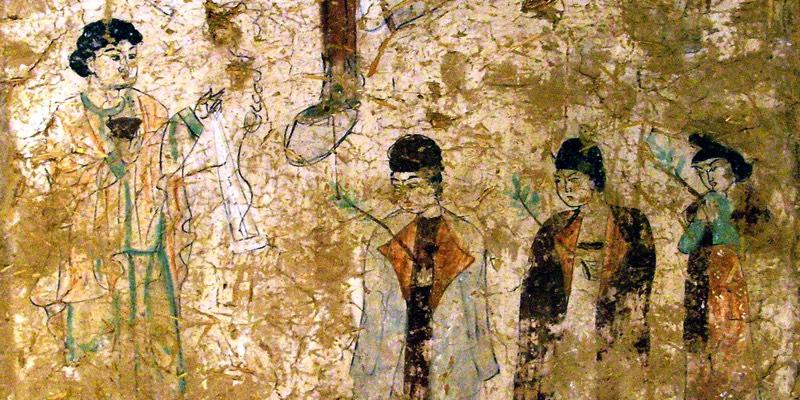
The first group to break from what was then considered “main stream” Christianity was what we now call Oriental Orthodox. There were at least 2 smaller schisms which came about as a result of a disagreement over Christology and the understanding of how Jesus could be both fully man and fully God at the same time. Nestorius was the most famous of these leaders and many churches left after the 4th ecumenical council to continue their manner of belief and worship in a way that they believed was most consistent with Scripture and Apostolic Christianity. Those groups still exist today in Egypt, Iraq, and other areas of the Middle East. Sometimes we hear of them as the “Coptic Christians”.
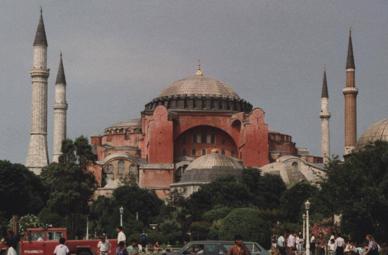
The second group did not “break away” or “leave” the church but actually split the Church in two. In 1054 AD, the Eastern church had experienced enough of the overstepping of “Papal Primacy” and when the filioque was added to the Nicene Creed, they decided it was time to move forward with the “orthodox” Christian faith and leave the Western Church to its own devices. The Pope of the Western church responded with a Papal Bull, excommunicating Archbishop Michael Cerularius and Michael responded by excommunicating the envoy from Rome (He couldn’t excommunicate the Pope as he had died in the process). This led to an Eastern Orthodox church and a Roman Catholic church in the west, both living side by side but primarily differing on authority and ecclesiological structure within.
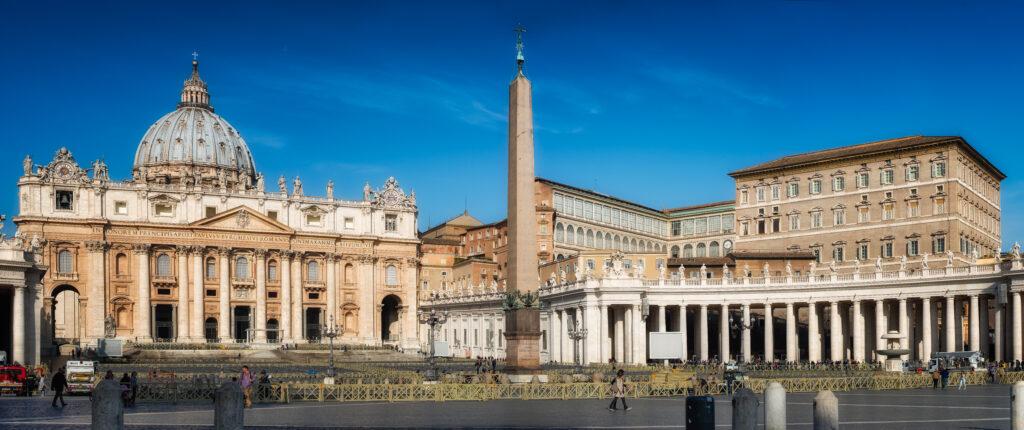
The third group by default was suddenly distinguished from the Eastern Orthodox Church by the name of the Roman Catholic Church. This became the highly traditional, authoritative Western church with its primary see in Rome and the Archbishop of Rome retaining the name of Pope. This group believes in infant baptism, trans-substantiation, veneration of the saints, infallibility of the Pope (and therefore the church), celibacy of the priesthood, heavy emphasis on Theotokos – Mary as the mother of God – she is worshipped and venerated, given qualities of deity, prayed to as an intercessor, considered sinless in and of herself, etc.
It is for this reason that the Roman Catholic church has departed from the Christian faith and has become a faith unto itself – too large and widespread to be considered a cult and too historically tied with visible Christianity to be considered its own world religion.
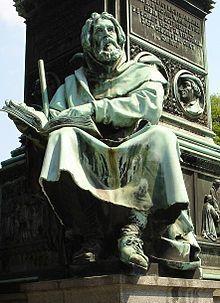
The second pre-reformer group called the “Lollards” would begin to form with an early reformer named John Wycliffe in England.
His accusations of the Pope as The Antichrist and his insistence on translating the Bible into English for his own people infuriated the Pope and inspired the next generational pre reformer named John Hus from Czechoslovakia.
The fourth group which I call the “Pre Reformers” broke away in multiple parts from the Roman Catholic church itself.
The first part of this third group was comprised of a passionate ascetic people known as the Waldensians.
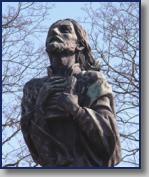
The fifth group to break took place as a result of the Reformation of the early 16th centure. The Lutherans who followed a young Catholic monk named Martin Luther who initially took offense at the practice of selling indulgences (The more rich you are, the more sin you can pay to have forgiven). But at the root of his spiritual fervor was the saving grace of Jesus Christ through faith in His shed blood on Calvary. Sola Scriptura, Sola Fide were staple doctrines for Luther and his followers thereafter.

A young French refugee in Geneva named Jean Calvin would pick up the cause of Zwingli in Switzerland and his “Institutes on the Christian Religion” would revolutionize and dominate Christian thought for nearly three centuries. A young man named John Knox, a Marian exile from Scotland, would come to study under Calvin and return back to his homeland and launch the Calvinist “Church of Scotland” – which would birth the Presbyterians. This entire group came to be known as the Reformed Church due to their Reformed doctrine or Doctrines of Grace derived from Calvin, Zwingli, Luther and Knox doctrines of Augustinian determinism.
The sixth group broke from the Roman Catholic Church not long after Lutherans. Ulrich Zwingli in Zurich was developing his doctrine of sola fide and sola scriptura at about the same time as Luther but when Luther struck the flame by nailing his 95 thesis to the door of Wittenburg in 1415, the local Zurich government officials were approaching Zwingli to create official doctrine for what could become a state church. Zwingli would die an early death in armed battles against the Catholics in his country.
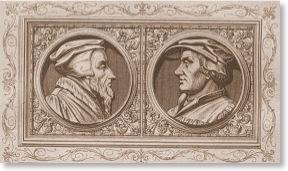

The final “family” of denominations to break from Catholicism happened with the “cessation” of England from the Catholic church as a result of King Henry the VIII petitioning the Catholic Pope for a divorce due to his current wife/queen being unable to produce a male heir for the king. When the Pope refused, King Henry followed the German and Swiss governments in their approach to establishing a church state and he decreed the Church of England or Anglican Church into existence with a single command. It would mostly resemble the Catholic church except in authority of the Pope (similar to the Eastern Orthodox split).
Over the course of the next several years, Archbishop Cranmer would be instrumental in instituting real reform into the theology and ecclesiology of the Church of England. This would be further reinforced when Henry’s daughter Elizabeth I took the throne.
All of the seven families of Christendom above would result in hundreds of groups of denominations themselves. Most of which I’ve mapped out in a flow chart of family tree of denominations for you to see.
Thank you Paul for your question!
Andrew
Do you have a question for our staff here at truthforsaints.com? Please go to our contact page and send it in. We will be happy to give an answer to those who ask. Please note that your question may be utilized as a blog entry for the education of others regarding World Religions, Cults, Christian Denominations, or various World Views.
No one receives eternal life and eternal presence with God, from who all good things come (James 1:17), by belonging to the right church or denomination. Rather only those who trust in the Jesus preached by the Apostles in the Bible for their own sin. We will not trust in a Savior for sins that we either don’t believe we have or that we think aren’t deserving of hell.But the Bible says that ALL have sin and the wages of our sin is eternal separation from God (death). The Bible says that you can know that YOU have eternal life. Click the button below to see if you are genuinely saved from your sins according to the Bible: