- TFS Podcast
- Support This Site

Valuable answers for valid questions about world religions, cults, worldviews and the Christian church
This site contains over 130 pages of free content in articles, videos and audio – it might be faster to use our search function to find what you are looking for
The Eastern Orthodox Church wasn’t founded in the traditional sense of a Protestant denominationk rather, like the Roman Catholic church, it emerged as a distinct “sect” via the Great Schism of 1054 A.D. The Eastern Orthodox Church is not considered a Protestant Church at all because it existed as a distinct entity nearly 500-600 years before the idea of “protestantism” even existed.
It began as simple a geo-political region of the existing worldwide (catholic) church (latin term “catholic” not to be confused with “Roman Catholic”) and in its earliest years leading up to the Great Schism, it was just considered the “eastern” entity of the worldwide Christian faith.
The Orthodox Church is not a Protestant Church at all. It began as simple a geo-political region of the existing worldwide church (latin term “catholic” not to be confused with “Roman Catholic”). The Orthodox Church became its own distinct entity as a result of the following events which occurred over the course of about 700+ years.
Eastern Orthodox – Eastern Byzantine empire – began forming alongside the “Roman Church” with the division of the Roman empire into east and west. The Eastern church – primarily Greek and North African, spoke a different language, enjoyed a different culture, and eventually held to a different governance ecclesiology over time. The emphasis of the primacy of see of Rome and its Bishop as possessing chief papal authority (Pope) the Eastern Orthodox church had already begun to operate independently of Rome.
The final spark occurred with the addition of the filioque (from the Son) to the Nicene creed which led to sharp criticism of the Roman Church with Patriarch Michael Cerularius accusing Pope Leo IX of overstepping his authority. The Pope was incensed and sent Cardinal Humbert to deliver a Papal Bull excommunicating Cerularius. Cerularius in turn, excommunicated Cardinal Humbert, AND Pope Leo IX who sent him. Both East and West churches emerged separate and distinct and have not rejoined since. This has come to be known as the “Great Schism” of 1054 AD. However because of the length of time it took for the schism to fully develop, it should be called the Great Schism of the 3rd – 11th centuries!
Prior to Diocletian’s decree in 280 AD to divide the massive Roman empire into an East and West, there were clear and obvious separate authorities of state and of church: there was one Emperor over all Christianity and there was a decentralized metropolitan church throughout the world. With Diocletian’s decree, there were now two Emperors and with the East remaining decentralized and metropolitan with primary Sees in Antioch, Alexandria and Jerusalem. However, the West took a different route, becoming more centralized around Rome alone and a definite hierarchy of self-perceived authority arose. This began to cause friction between the two geographical church areas.
Languages – Latin v Greek. The Eastern church spoke Greek, the western church spoke Latin which made for an inescapable division in communication from the start.
Customs – Rome = legal mindset; Greece = philosophical mindset. The Greek approach to conduct and approach is one of a philosophical “betterment of man and correcting of mind”. Greeks placed an emphasis on proper thought leading to proper behaviour. The Roman approach to life is one of an authoritarian correction of behaviour and betterment of society by bringing man into line. Romans placed an emphasis on strong authority in order to command proper behaviour from its citizenry.
Challenges – Muslims capture Mediterranean; Barbarians capture Italy, Europe. The Romans were challenged (and eventually overcome) by Germanic Nomads known as Barbarians, Goths, and Visigoth tribes of Europe. The Greeks were not threatened by this group but were more threatened by the Muslims nearly 200 years later. A threat which wouldn’t affect the Roman empire until well after it fell in the 5th century.
This council resulted in a number of Eastern churches breaking off from fellowship or “communion” with the worldwide church. The Roman Emperor declared Constantinople of the east to be of equal importance and authority to Rome in the west. This was highly opposed by the Roman church contingency and the decision was reversed. This left a very bad taste in the mouths of the Eastern church as it became clear that Rome
was attempting to usurp the current authority of the church and claim itself as the pre-eminent authority over the church. Note: this is in direct opposition to the teaching of Jesus who said we are not to seek to be in power over one another but if one seeks to first he must be servant of all. He is not to “lord his authority” over others as the gentile pagans do.
At this same council, Leo I, who was the current Bishop of Rome, argued for the primacy of the Roman see and subsequently the Bishop of Rome as the primal Bishopric or “papacy”. It is believed that the term “Pope” was, for the first time, used as a descriptive title to describe the primary papacy of the church, which was established for the Bishop of Rome by the Bishop of Rome! This was unequivocally a grab for power that wouldn’t be wrested from Rome until the Reformation over a thousand years later.
In the early years of Christianity, church leaders were struggling to arrive at a sound Biblical understanding of the nature of Christ – His mind, His soul and His very Nature. One leader named Nestorius believed in a sort of “fusion” of both God and man in the same person of Christ which many churches in the ancient near-east were ok with as the Bible does say that Jesus was both God and man in the same person. However, Nestorius’ view of a “fused” Christ means that He was never fully God with humanity fused within him and was never fully man with God’s nature fused in the man so this was rejected. However there were also those “Non-Chalcedonian” churches in the East like Egypt, Syria, Armenia and Mesopotamia who held that Christ was simply “unified” in His nature and subsequent person.
In 638AD Eastern Emperor Heraclius issued the Ecthesis which was a letter which proposed a “compromise” of sorts with the idea of monothelitism. It stated that Christ had two natures but that Christ had only one “will”. Severinus and John IV (then called Archbishops as the office of Pope had not yet been invented by Rome) condemned the Ecthesis while Sergius the Patriarch of Constantinople in the East along with Heraclius supported the Ecthesis. This was one of the first major theological clashes between East and West. Many Non-Chalcedon churches embraced monothelitism and broke off from the East-West “worldwide” church. This demonstrated to the Eastern church that there was something wrong with the growing unbiblical dominance being exerted over the East by the Western Roman Church and over all who disagreed with their extra-Biblical doctrines. This would be a hallmark trait of the Roman Church for more than a 1000 years thereafter.
In the early 8th century, there arose a bit of a “mini” reformation to rid the church of the worship of paintings, statues and pictures of holy images and so-called saints and even of the Lord Himself. This was an horrific practice that slipped into the church by way of pagan influence in the western and eventually eastern churches. The weak argument “for” icon veneration was that these pictures and images supposedly provided a “window” to worship God, a tangible representation of who God is to “help” the worshipper. This is decidedly against Scripture whereby Almighty God declared “Thou shalt not make unto thyself any graven images whether of things in heaven above nor on earth below, nor shall you bow down to them nor worship them. This icon worship is still practiced today in the Roman Catholic and Eastern Orthodox churches as many bow down to statues of Mary and of Peter, kissing their feet and even lighting candles to them. The Catholics even went so far as to change the reading of the Ten Commandments whereby the above commandment was removed and replaced with another reading altogether.
In the East, the Eastern Emperor Leo III in 730 AD declared veneration (worship) of icons illegal and set about destroying them even attacking Bishops and Arch Bishops who supported icons veneration. These that supported and carried out Leo III’s command were called “Iconoclasts” which means “image destroyers”.
In the West, Pope Gregory III held a Synod where he condemned the iconoclasts and sent an envoy to excommunicate them from “the Church”. This envoy was arrested by Byzantine (eastern) authorities and this clash of religious authority would cause an even greater rift to develop between east and west. Even though many in the east were, themselves, against iconoclasts. This controversy would be the first altercation between the two big bullies of the religious playground and forever the question would reside in the mind of both eastern and western churches would remain: who is in charge here?
Finally, Irene, the mother of Eastern Emperor Constantine VI asked Pope Hadrian I to convene a council in 787 to address this issue – (7th ecumenical council) where the practice of iconoclasm was officially condemned and icon worship would forever be etched in the ecclesiology (church practice) of both the Western Roman Church and the Eastern Church. In fact, Orthodox churches everywhere today celebrate the iconoclastic defeat on the first Sunday of Lent and statues of dead saints and Mary are prayed to and kissed and have candles burnt to them.
This series of squabbles and confrontations between church and state authorities based on geographic lines of east and west would be the deep seated rift that has been percolating for nearly 500 years to this point. They are now starting to rise to the surface where they would never submerge again.
In 800 Pope Leo III took it upon himself to crown Charlemagne, a Frankish King, as Emperor of the “Holy Roman Empire” which was nothing more than the Western European empire as Rome was weak, useless, and in shambles politically at this time. Charlemagne was considered an “intruder” by the East, he was not accepted by the Byzantine authorities as the appointment was considered an insult to them and a violation of ecumenical authority. This was the pinnacle and peak of Roman Papal power – for the first time, a so-called “head of church” appointing a “head of state”.
Several decades later, Ignatius the Patriarch of Constantinople in the East, confronted Caesar Barda, the uncle of Eastern Emperor Michael III, over his behaviour, and was thereafter removed from the patriarchy by Barda who, outside of obvious nepotism, shouldn’t have had the authority to appoint or oppose anyone, much less the eastern head of state.
Photius, a relative of Eastern Emperor Michael III, was appointed to Ignatius’ post after being removed. This appointment was opposed by Western Church Pope Nicholas I who believed that appointing and removing Patriarchs was not the place of an Eastern Emperor (or his relatives) and so Nicholas had Photius officially deposed at the 8th ecumenical council which, in itself wasn’t much of a controversy as it was heartily accepted even by the Eastern Church who agreed that Emperor Michael should not have removed one of their officials.
Pope Nicholas I, after the 8th Ecumenical Council, reinstated Ignatius as Patriarch of Constantinople in the Eastern Church. Photius then moved to have Pope Nicholas I excommunicated based on the grounds of the filioque (more about what this means in a moment), papal primacy, and the Bulgarian jurisdiction.
Now, Basil the Macedonian replaced Michael III as the new Byzantine emperor and deposed Photius yet again in an effort to curry alliance with the Latin pope and Western Emperor which wouldn’t have been a bad thing for east west relations but it did cross the line of heads of state appointing and deposing heads of church – which was the bad thing.
The Filioque was an addition to the Nicene Creed of 325 AD by the Western Roman Church whereby the Holy Spirit (Third Person of the Trinity) is said to proceed from the Father AND the Son. This was done originally to defend the consubstantiality of Jesus the Son of God with God the Father.
For 700 years prior to this, the Nicene creed (which was universally agreed that it could not be changed as it properly defined orthodoxy in Christian belief) stated that the Holy Spirit proceeded from the Father only. The etymology of the word filioque is Latin for “and from the Son” which are the exact added words to the Nicene Creed. This clause was added with the intent to defend consubstantiality of Jesus the Son (2nd Person of the Trinity) with the Father (1st Person of the Trinity). Ultimately, the filioque can be perfectly defended by Scripture so there isn’t much damage done there. However, the fact that the Western Pope and Church took it upon themselves to “add” doctrine of supposed orthodoxy to the settled Nicene Creed acted as the final usurping of church authority which ignited a powder keg known as “The Great Schism” in 1054 AD
Part of the delayed explosion was due to the fact that this addition did not appear in official Roman liturgy for several years. Ultimately it would be 30 years before the true effect of this spark would be felt, when in one sour exchange we will see a Western Church Pope excommunicate an Eastern Church Patriarch and an Eastern Church Patriarch excommunicate a Western Church Pope resulting in one massive schism and the emergence of two massive denominations as separate Christian entities.
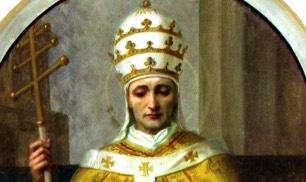
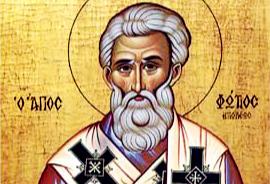
Pope Leo IX of the Western Roman Church – fought against the Normans in 1052 and was taken captive
Michael Cerularius – Archbishop of Constantinople and Patriarch of the Eastern Church occupied the highest level of religious authority in the East
Prior to this, Leo suppressed Greek liturgy in his domain which didn’t sit well with the Eastern Church.
Michael suppressed western Latin liturgy in his domain and encouraged his parishes to only conduct services in the Eastern/Greek liturgy.
Leo sent legate Cardinal Humbert (not the nicest and humblest of fellows) to Michael Cerlarius to give him supposed “evidence” from Constantine’s “donatio” which supposedly carried Constantine’s appointment of Rome as the primary See and its Bishop with primal papacy. This document was proven (even by the Roman Church) to be a outright forgery.
Rome could not use the Donatio to claim they were the “primary anything” as a head of state was not given the authority on earth bind/loose foundational doctrine for the church. This authority was given only to the Apostles as they planted churches and were used by the Holy Spirit to compose Scripture.
The Donatio was rightfully refused by Cerularius and Pope Leo IX officially blew his pointy top thus marking the start of the descent of papal influence which had reached its peak during his tenure.
Cerularius did the unspeakable for his time: He refused the Roman Pope’s envoy which carried the “Donatio” demanding the Archbishop of Constantinople’s recognition of the supremacy of Rome. This was an affront to the self-important Roman Bishop’s self-appointed primacy.
Pope Leo IX sent Cardinal Humbert back to Cerularius to deliver a Papal Bull of Excommunication. Thereby excommunicating the highest authority of the Eastern Church and those that followed him from the Western Roman Church. Humbert laid this Papal Bull of Excommunication directly on the altar of Hagia Sophia (like the Vatican of the Eastern Church – see photo at top of page) as a blatant disregard for the Eastern Church’s leader, Cathedral, and followers. With one obnoxious act that followed nearly 800 years of obnoxious acts by the Roman Church – they effectively cut their numbers in half and a new denomination was born.
In an act of “tit for tat”, Cerularius excommunicated Humbert and his envoy from the Eastern Church along with the dead Pope Leo IX. Both sides ultimately excommunicated each other giving full evidence to the world that the Biblical church that Jesus established was not evident in either the Western Roman Church nor the Eastern Greek Church. The real church would continue on, far removed from this carnal conflict of pride.
Crime Against The Eastern Church – Roughly 20 years after the Massacre of the Latins by the East, the Roman Pope was still commissioning “Crusades” by his church which is now referred to as the “Roman Catholic Church”. These were decidedly unbiblical and to this day, true Christians are blamed for this heretical practice from an apostate church.
Crime Against The Western Church – Although there were efforts at reconciliation between east and west and continual attempts at diplomacy, a few incidents would cauterise the wounds on both sides and make a rejoining of East-West impossible.
The 4th Crusade which took place 1202-1204 AD was especially evil and bloody:
Pope Innocent III of the Roman Catholic Church called for this crusade out of his desire to supposedly free Jerusalem from the Muslim Saladin’s rule. This decree completely ignored Jesus’ stern warning to the Apostle Peter that “He who lives by the sword will die by the sword” and again “Love your enemy, bless them, and do not curse them”. This Pope resorted to carnal methods to carry out a worldly conquest of a city that God Himself will liberate and establish at the conclusion of the 7 year tribulation He describes in Revelation.
Innocent III’s Crusade began as a “commercial” venture to repay a massive Debt to the Venetians of Rome by way of killing Muslims and allowing the Venetian ships to capture booty for themselves. It didn’t turn out quite as it was designed.
If something were to go wrong (and it did) and no conflict or invasion of Jerusalem were to take place (and it didn’t) Innocent III forbade his Crusading Venetian mercenaries from carrying out violence against their Christian “brothers”. They found no opportunity to invade and loot the Muslims of Jerusalem, they instead chose to ignore Pope Innocent’s commands and, having the massacre of the Latins, still fresh in memory, they instead chose to sack, loot, pillage, and rape Constantinople.
These Venetian members of the apostate Roman Catholic Church behaved like savage beasts, raping Christian women, robbing and murdering Christian men, and ultimately desecrated the Hagia Sophia – something even the Muslims would not do. This was written about by Eastern Orthodox clergy who were eyewitnesses to this horror.
The East struck the first blow with an incident which lives in historic infamy: The Massacre of the Latins took place in 1182 when the Constantinople populace who now identified themselves as the Eastern Orthodox Church (The “true” Church) killed or sold the Latin population of the city into slavery to the Turks. Ironically, it is these same Turks that would be the downfall of the Eastern Church nearly 300 years earlier.
The widow of Eastern Emperor Manuel I was Latin (Roman). A nationality/culture that was by now, hated by the Eastern citizenry. She ruled as regent this was a thorn in the side of the people
Andronikos Komnenos used violence and described his actions as “liberating” Constantinople from the Latins, He held a celebration and the people carried out murders of young, old, and Latin clergy.
As a result of these 8 steps over the course 0f 700+ years, two key ‘sects’ of the “visible church” would emerge. They would not yet be considered denominations until well into the denomination age of the church in the 17th-19th centuries AD. Now that the Eastern Orthodox Church has emerged, lets take a look at some historical and doctrinal distinctives vs what the Bible has to say about these doctrines:
The Eastern Church would undertake a different approach to the expansion of Christianity than that of the Western Roman Church. Instead of appointing Kings and Queens and entangling itself in the affairs of Secular Empires like the Roman Church did, the Eastern church would send out missionaries to carry the Gospel. The most notable commission took place in 863 AD with the sending of Cyril and Methodius to evangelize the Slavs of eastern Europe and here are just a few of the results that followed on from their journeys to the Slavic nations:
Armenian Orthodox – part of the Oriental Orthodox churches, Armenia adopted Christianity as its state religion in 301 AD due to the work of the Apostles Bartholomew and Thaddeus whom they claim as their founders and NOT Gregory the self-proclaimed Pope and ‘great’ as Catholic tradition suggests)
Serbian Orthodox was founded in 870 AD possibly by missionaries sent by Cyril and Methodius
Russian church (later to be the Russian Orthodox) was founded in 988 when Prince Volodymyr (Vladimir) of Kievan Rus accepts the faith of the Eastern Church and his subjects follow suit. Russian Orthodox is perhaps the most famous and numerous of all the churches established from the preaching of Cyril and Methods. Prince Volodymyr (Vladimir) of Kievan Rus is reportedly converted and accepts the Orthodox faith – which at this point was decidedly different in liturgy from the Roman Catholic liturgy but not yet officially separate. This group would continue in its missionary efforts most notably in 1794 when the Russian Orthodox Church sent missionaries to Alaska in the New World and established the first Orthodox Church in all of North America. Today there are nearly 125 million Russian Orthodox adherents or participants.
This is an important part of Eastern Orthodox belief and to them, ensures continuity with the church that Christ founded – however, there isn’t an idea of “Apostolic Succession” of any kind in Scripture. The importance of Apostolic Succession is that the Eastern churches believe that the Apostles were given the authority to forgive sins on earth as intermediaries and administer the sacraments. They believe that without Apostolic Succession there are no Sacraments and without sacraments there is no operation of the Holy Spirit and without the operation of the Holy Spirit there is no church.
The doctrine of Apostolic Succession developed along with sacerdotalism in the 5th-7th century and is decidedly unbiblical. Rather, in the Bible believers are said to possess a “royal priesthood” and full authority to proclaim Jesus to everyone:
"But you are a chosen generation, a royal priesthood, a holy nation, His own special people, that you may proclaim the praises of Him who called you out of darkness into His marvelous light; "
1 Peter 2:9
Eastern Orthodox recognises 39 Old Testament and 27 New Testament books, but also a collection of books not found in the original Hebrew Bible. These are known as Deuterocanonicals i.e. a second canon of scripture. Known as “apocrypha” to Biblical Christianity
Historical Biblical Christianity holds to the 66 books confirmed by the early church Fathers of the 4th century. 39 books of the Old Testament in keeping with the accepted Hebrew inspired workds and 27 books of the New Testament which are listed in Athanasius’ Festal Letter in 367 AD. The Canon of Scripture was discovered by 419 Bishops of the church sifting through all the circulated works and recognizing some books as inspired, some as helpful and important but not inspired and some as dangerous, false and uninspired.
Eastern Orthdox Priests and Bishops must be male, but deaconesses are permitted, though the order is dormant. Priests and deacons may marry before ordination but not after. Bishops, on the other hand, must be celibate. This is somewhat different from the Roman Catholic aberration which claims that Priests, Bishops, Archbishops and Cardinals are all to be male and must not ever marry.
The Bible holds that ALL believers are priests and nowhere does it suggest that there is somehow an office of “priest”. This is an aberration which developed in the 4th century AD under Constantine who ordered this position as a compromise with the pagan religions of the Roman Empire which had “priests” and to make His new faith like them, he exerted an unbiblical influence over the weak leaders of the time. The Bible says that there is only 1 mediator between God and man, the Man Christ Jesus:
"For there is one God and one Mediator between God and men, the Man Christ Jesus "
1 Timothy 2:5
The Bible does say that only men can be teachers, deacons or hold any authority in the church. However, the Bible says that to forbid men to marry is the mark of godless false teaching:
"Now the Spirit expressly says that in latter times some will depart from the faith, giving heed to deceiving spirits and doctrines of demons, speaking lies in hypocrisy, having their own conscience seared with a hot iron, forbidding to marry, and commanding to abstain from foods which God created to be received with thanksgiving by those who believe and know the truth."
1 Timothy 4:1-3
Commonly termed the ‘Mystic Supper’ or ‘Divine Liturgy’ by the Eastern Orthodox – This makes present Christ’s sacrifice and therefore forgiveness of sins is obtained through it. It is also an encounter with the Risen Christ. This doctrine is called “transubstantiation” and is also observed by the Roman Catholic church.
The doctrine of transubstantiation is blasphemous in the eyes of Biblical Christianity as it proposes that the priest (an unbiblical position) magically transforms the store-bought wafer and wine in the ACTUAL physical body and blood of Jesus Christ. This crucifies Christ all over again despite His final words on the cross telling us that “It is finished!:
"So when Jesus had received the sour wine, He said, “It is finished!” And bowing His head, He gave up His spirit. "
John 19:30
The Bible holds that forgiveness of sin is by the grace of God alone through faith in Christ alone. No magic wafer nor a mediator called a ‘priest’ is ever mentioned as part of the process:
"For by grace you have been saved through faith, and that not of yourselves; it is the gift of God, 9 not of works, lest anyone should boast."
Ephesians 2:8-9
During the Eucharist, the Eastern Orthodox Priest calls down the Holy Spirit (in Greek: epiklesis) upon the gifts (the bread and the wine). They then change into the actual body and blood of Christ. The precise way in which this happens is a divine mystery according to Greek clergy. This process is identical to the Roman Catholic view of “transubstantiation” whereby the bread and wine is supposedly “literally” changed into the actual flesh and blood of Jesus. Many post-reformation Christians consider this to be one of the most blasphemous aberrations of Scripture which found its way into both East and West Churches in the high middle ages.
The doctrine of transubstantiation is blasphemous in the eyes of Biblical Christianity as it proposes that the priest (an unbiblical position) magically transforms the store-bought wafer and wine in the ACTUAL physical body and blood of Jesus Christ. This crucifies Christ all over again despite His final words on the cross telling us that “It is finished!:
"So when Jesus had received the sour wine, He said, “It is finished!” And bowing His head, He gave up His spirit. "
John 19:30
The Bible holds that forgiveness of sin is by the grace of God alone through faith in Christ alone. No magic wafer nor a mediator called a ‘priest’ is ever mentioned as part of the process:
"For by grace you have been saved through faith, and that not of yourselves; it is the gift of God, 9 not of works, lest anyone should boast."
Ephesians 2:8-9
The consecrated elements can only be received by members. Eastern Orthodox policy is to have communion in both kinds (i.e. both the bread and wine are given to those present).
The Biblical view of the elements is that they are symbolic only and are to be partaken of by believers. There is no such thing as “consecrated elements” in the Bible but the practice of distribution of communion to members of the church is somewhat Biblical.
Therefore whoever eats this bread or drinks this cup of the Lord in an unworthy manner will be guilty of the body and blood of the Lord. But let a man examine himself, and so let him eat of the bread and drink of the cup. For he who eats and drinks in an unworthy manner eats and drinks judgment to himself, not discerning the Lord’s body. For this reason many are weak and sick among you, and many sleep. For if we would judge ourselves, we would not be judged. But when we are judged, we are chastened by the Lord, that we may not be condemned with the world. Therefore, my brethren, when you come together to eat, wait for one another.
1 Corinthians 11:27-33
The Holy Spirit is God – the third person of the Trinity. Eastern Orthodox believes that He proceeds from the Father alone as in the original Nicene Creed and the Father sends the Spirit at the intercession of the Son. The Son is therefore an agent only in the procession of the Spirit in the Eastern Orthodox view.
1 Colossians 1:15-16 says that the world was created for Christ, through Christ and by Christ so it isn’t a great leap to assert that the Holy Spirit, the third member of the Holy Trinity could proceed from Jesus the Son in addition to God the Father. In John chapter 15 vs 26 the scriptures appear to assert a combination of both positions!
“When the Helper(Comforter) comes, whom I will send to you from the Father, that is the Spirit of truth who proceeds from the Father, He will testify about Me..."
John 15:26
"But I tell you the truth, it is to your advantage that I go away; for if I do not go away, the Helper(Comforter) will not come to you; but if I go, I will send Him to you."
John 16:7
This position on marriage is essentially in line with Scripture. The biblical position is that adultery is a legitimate cause for divorce but the higher road is that of repentance, forgiveness and reconciliation as the union between man and woman is God ordained and the Lord hates divorce.
“For the Lord God of Israel says That He hates divorce, For it covers one’s garment with violence,” Says the Lord of hosts. “Therefore take heed to your spirit, That you do not deal treacherously.”
Malachi 2:16
"The Pharisees also came to Him, testing Him, and saying to Him, “Is it lawful for a man to divorce his wife for just any reason?” And Jesus answered and said to them, “Have you not read that He who [a]made them at the beginning ‘made them male and female,’ and said, ‘For this reason a man shall leave his father and mother and be joined to his wife, and the two shall become one flesh’? 6 So then, they are no longer two but one flesh. Therefore what God has joined together, let not man separate.”
Matthew 19:3-6
The Assumption of Mary is the unbiblical fictitious event invented by the Roman Catholic Church which claims that Mary who gave birth to Jesus ascended into heaven. This event was added as lore to Mary as the Roman church began to go deeper and deeper into Mary worship whereby she takes on the same capabilities as God Himself and the same intercessory powers as Jesus Himself. The Immaculate Conception is the unbiblical fictitious event invented by the Roman Catholic Church which claims that, like Jesus the Holy One of God, Mary was born without sin, giving her the same perfect nature as Jesus Himself. It is a wicked perversion of the person of Mary who is the most blessed woman in history. Catholics attempt to justify this aberrant belief by claiming it was necessary in order for her to be the Theotokos or “Mother of God”, thus protecting the deity of Christ from the Arian heresy that Jesus was just a mere man. The truth is, God has no mother and Jesus is God because God’s word says the He is God and only an eternal payment for sin could cover an eternity of sins.
All such concepts of Mary were developed outside of Scripture. In order for Mary, a human, to hear, receive and/or respond to millions of prayers after she has died would mean she possesses the same attributes of omniscience and omnipotence as Almighty God which is blasphemous. There is only one intermediary between God and man – the man Christ Jesus.
"For there is one God, and one mediator also between God and men, the man Christ Jesus,"
1 Timothy 2:5
“They sacrificed to demons who were not God, To gods whom they have not known, New gods who came lately, Whom your fathers did not dread."
Deuteronomy 32:17
This doctrine of the Papal primacy of Rome was created in the early 5th century and was first asserted at a council by Leo I who was the first person to take on the title of Pope. The office didn’t exist anywhere in the church before this time but to add legitimacy to this new title, the Roman Catholics made up a false history whereby Peter was the first Pope because he was the first Bishop of Rome. Nothing in the Bible nor in the oldest records of church history (Eusebius) support this falsified account.
This is just another unbiblical practice whereby the Roman Catholics brought in a Roman Empire power-hungry authoritarianism into the church which is clearly refuted by the words of Jesus:
"But Jesus called them to Himself and said, “You know that the rulers of the Gentiles lord it over them, and their great men exercise authority over them. It is not this way among you, but whoever wishes to become great among you shall be your servant, and whoever wishes to be first among you shall be your slave; just as the Son of Man did not come to be served, but to serve, and to give His life a ransom for many.”
Matthew 20:25-28
No one is infallible, not even a collection of Bishops at a council. The Pope is a falsely created office and therefore has no authority whatsoever in the Biblical church. History proves this about the false Popes when one examines how many times these men have contradicted each other or former doctrines of the Roman Church. At one point there were 3 yes THREE infallible Popes in office at the same time, none of them wanted to leave office for the other two. They contradicted each other and Popes have made false claims which did not nor will never come to pass which makes them a false prophet and to be rejected.
"But the prophet who speaks a word presumptuously in My name which I have not commanded him to speak, or which he speaks in the name of other gods, [m]that prophet shall die.’ You may say in your heart, ‘How will we know the word which the Lord has not spoken?’ When a prophet speaks in the name of the Lord, if the thing does not come about or come true, that is the thing which the Lord has not spoken. The prophet has spoken it presumptuously; you shall not be afraid of him."
Deuteronomy 18:20-22
Jesus declared on the cross “It is finished!” to signify that the work of redeeming the sins of mankind, for those who put their trust in Him, was finished upon his death and no further redeeming process e.g. purgatory is necessary. The Apostle Paul makes it clear that for believers we are “absent from the body and immediately present with the Lord”. The shocking thing for the Roman Catholic will be to learn that purgatory doesn’t exist and their eternal destiny will be hell, a place of suffering if they refuse to repent from trusting in the goddess Mary, the Saints (real and imagined), the Pope and the Catholic church instead of trusting in Jesus alone.
After this, Jesus, knowing that all things had already been accomplished, to fulfill the Scripture, said, “I am thirsty.” A jar full of sour wine was standing there; so they put a sponge full of the sour wine upon a branch of hyssop and brought it up to His mouth. Therefore when Jesus had received the sour wine, He said, “It is finished!” And He bowed His head and gave up His spirit."
John 19:28-30
"Therefore, being always of good courage, and knowing that while we are at home in the body we are absent from the Lord— for we walk by faith, not by sight— we are of good courage, I say, and prefer rather to be absent from the body and to be at home with the Lord. "
2 Corinthians 5:6-8
This is a false belief dating back to the 4th and 5th centuries and having been rightly rejected (for the most part) by the Reformers of the 16th century. Most Protestant churches accept baptism and communion as traditions of obedience but in keeping with the Scriptures they are symbolic: credo (conscious choice) baptism by submersion is Biblical in the sense that it represents outwardly that there has been a change inwardly with the old man going into the watery tomb and the new man in Christ arising from the water. There is no Biblical support for pedo (clueless infant) baptism nor baptism by sprinkling of water that has somehow been made “holy” by the prayer of a sinful man going by an unbiblical title of “priest”. Nowhere in Scripture does it stipulate that the Holy Spirit “requires” these “sacraments” to either work in the church nor for the church to exist.
"Now as they went down the road, they came to some water. And the eunuch said, “See, here is water. What hinders me from being baptized?” Then Philip said, “If you believe with all your heart, you may.” And he answered and said, “I believe that Jesus Christ is the Son of God.” So he commanded the chariot to stand still. And both Philip and the eunuch went down into the water, and he baptized him. Now when they came up out of the water, the Spirit of the Lord caught Philip away, so that the eunuch saw him no more; and he went on his way rejoicing."
Acts 8:36-39
Like baptism, communion is an act of obedience whereby the believer comes together as the disciples in the upper room and we share in a bit of bread (unleavened if to match the unleavened bread broken at Passover like Jesus did) to represent the body of Christ and either a bit of wine or grape juice to represent the blood of Christ. We eat this together in “remembrance” of Jesus and His sacrificial work on the cross for our sins.
"Then He took the cup, and gave thanks, and said, “Take this and divide it among yourselves; 18 for I say to you, [c]I will not drink of the fruit of the vine until the kingdom of God comes.” And He took bread, gave thanks and broke it, and gave it to them, saying, “This is My body which is given for you; do this in remembrance of Me.” Likewise He also took the cup after supper, saying, “This cup is the new covenant in My blood, which is shed for you. "
Luke 22:17-20
These practices of worship and prayer to the saints would be idolatry if they were called what they are, but long long ago, the wording of “worship” was changed to “veneration” which is really just a case of semantics as these ‘saints’ are believed to act as intercessors between God and man and may be invoked in prayer. This is an identical form of worship of the dead as the Roman Catholic Church although despite referring to the process as “veneration” as both groups are trusting in dead humans to fulfil and answer prayer.
"For there is one God, and one mediator also between God and men, the man Christ Jesus,"
1 Timothy 2:5
The Bible clearly states that ALL genuine believers are called ‘saints’ and a ‘royal priesthood’.
"Do you not know that the saints will judge the world? And if the world will be judged by you, are you unworthy to judge the smallest matters? 3 Do you not know that we shall judge angels? How much more, things that pertain to this life?"
1 Corinthians 6:2-3
The Eastern Orthodox beliefs in salvation is an aberration of what is found in Scripture. We are told that we must be born again, not pursue ‘union with God’ as this sounds more Hindu than Christian and the concept is not found in the Bible. Also, the Bible makes it clear that we are saved by grace (gift of God) alone through faith (assurance of things hoped for) alone in Christ (not Mary or saints) alone.
Scripture tells us that Salvation is immediate by way of Justification but the process of Sanctification – being made more like Christ is a lifelong process which is somewhat similar to the Eastern Orthodox idea of a lifelong process except that it is only sanctification that is lifelong.
"This man came to Jesus by night and said to Him, “Rabbi, we know that You are a teacher come from God; for no one can do these signs that You do unless God is with him.” Jesus answered and said to him, “Most assuredly, I say to you, unless one is born again, he cannot see the kingdom of God.” Nicodemus said to Him, “How can a man be born when he is old? Can he enter a second time into his mother’s womb and be born?” Jesus answered, “Most assuredly, I say to you, unless one is born of water and the Spirit, he cannot enter the kingdom of God."
John 3:2-5
"For by grace you have been saved through faith, and that not of yourselves; it is the gift of God, 9 not of works, lest anyone should boast."
Ephesians 2:8-9
It is this position toward Scripture that allows for so many unbiblical doctrines to creep into the Eastern Orthodox theology. Jesus condemned the heresy of the Pharisees whereby they nullified the Word of God by their traditions. Adhering to God’s holy revelation in Scripture enables Christians to remain in communion with the One true God and Jesus Christ whom He has sent. Scripture is full sufficient to make the man of God complete and we are commanded to learn how to rightly divide it for ourselves and others.
"But you must continue in the things which you have learned and been assured of, knowing from whom you have learned them, 15 and that from childhood you have known the Holy Scriptures, which are able to make you wise for salvation through faith which is in Christ Jesus. All Scripture is given by inspiration of God, and is profitable for doctrine, for reproof, for correction, for instruction in righteousness, 17 that the man of God may be complete, thoroughly equipped for every good work.."
2 Timothy 3:14-17
"Be diligent to present yourself approved to God, a worker who does not need to be ashamed, rightly dividing the word of truth."
2 Timothy 2:15
Like Roman Catholicism, Oriental Orthodox and Anglican Churches, Eastern Orthodox liturgy is considered “high church” – heavy ceremony, ritual, dress and tradition as opposed to “Low Church” which is centered around a Biblical example of liturgy, low to no ceremony, ritual and tradition with leadership dressed appropriately but not in a costume of sorts.
"How is it then, brethren? Whenever you come together, each of you has a psalm, has a teaching, has a tongue, has a revelation, has an interpretation. Let all things be done for edification."
1 Corinthians 14:26
"My brethren, do not hold the faith of our Lord Jesus Christ, the Lord of glory, with partiality. For if there should come into your assembly a man with gold rings, in [a]fine apparel, and there should also come in a poor man in [b]filthy clothes, and you [c]pay attention to the one wearing the fine clothes and say to him, “You sit here in a good place,” and say to the poor man, “You stand there,” or, “Sit here at my footstool,” 4 have you not shown partiality among yourselves, and become judges with evil thoughts?"
James 2:1-4
No one receives eternal life and eternal presence with God (from Whom all good things come – James 1:17), by belonging to the right church, denomination, world religion, or by having a particular world view. Rather only those who trust in the Lord Jesus (preached by the Apostles in the Bible) for their own sin. We will not trust in a Savior for sins that we either don’t believe we have or that we think aren’t deserving of hell. But the Bible says that ALL have sin and the wages of that sin is eternal separation from God (death). The good news is that the Bible says that you can know that YOU have eternal life. Click the button below to see if you are genuinely saved from your sins according to the Bible: